
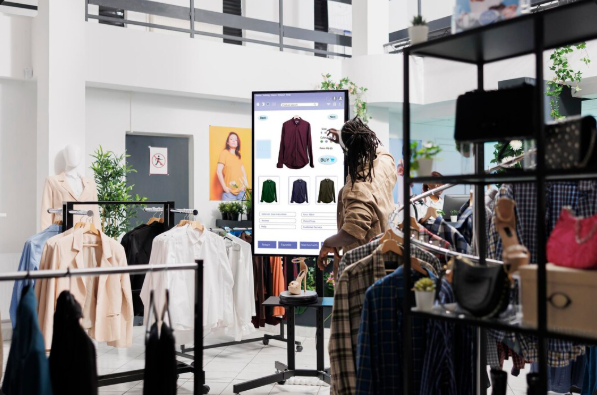
The retail industry is changing faster than ever, and clothing store pos are at the center of this transformation. In 2026, Point of Sale (POS) systems are no longer just checkout machines—they have become the core operating system of modern fashion retail. From inventory tracking to customer experience and AI-driven insights, POS technology is reshaping how apparel businesses run daily operations.
Clothing retailers face unique challenges like size variations, seasonal demand shifts, and fast-moving fashion trends. Because of this, POS systems are evolving to become smarter, faster, and fully connected across all sales channels. Below are the most important POS trends shaping clothing stores in 2026.
1. AI-Powered POS Systems Become the New Standard
Artificial intelligence is now deeply integrated into modern POS systems. Instead of just recording sales, POS platforms analyze customer behavior, predict demand, and suggest smarter business decisions.
For clothing stores, AI helps in:
- Predicting which sizes and styles will sell fastest
- Reducing overstock and dead inventory
- Suggesting personalized product recommendations
- Automating pricing and discount strategies
By 2026, POS systems are no longer passive tools—they actively guide business decisions in real time.
2. Cloud-Based POS Dominates Fashion Retail
One of the biggest shifts in retail technology is the move to cloud-based systems. Clothing stores are rapidly adopting cloud POS because it allows access to sales and inventory data anytime, anywhere.
Key benefits include:
- Real-time inventory updates across all branches
- Easy access from mobile devices and tablets
- Automatic software updates without downtime
- Centralized control for multi-store operations
Cloud POS has become the foundation of modern retail infrastructure, replacing traditional offline systems.
3. Unified Commerce Replaces Traditional Omnichannel Systems
In 2026, clothing retailers are moving beyond basic omnichannel strategies. The new standard is unified commerce, where all sales channels are fully connected in one system.
This means:
- Online and in-store inventory is always synced
- Customers can buy online and return in-store easily
- Pricing is consistent across all platforms
- Staff can access full customer purchase history
This unified approach eliminates confusion and improves customer trust, creating a seamless shopping experience.
4. Mobile POS and Checkout Flexibility
Speed is everything in fashion retail. Customers expect fast, frictionless checkout experiences, and mobile POS systems are making that possible.
Modern clothing stores now use:
- Mobile devices for checkout anywhere in the store
- Self-checkout kiosks
- Scan-and-pay systems
- Contactless payment options
This reduces waiting time and improves customer satisfaction, especially during peak shopping hours.
5. Smarter Inventory Management for Fashion Items
Inventory management has always been a challenge for clothing stores due to variations in size, color, and style. In 2026, POS systems are solving this problem with advanced automation.
New inventory features include:
- Real-time stock tracking by size and color
- Automatic reorder alerts
- Batch tracking from suppliers
- Multi-location stock transfers
Some advanced systems even calculate profit per item instead of just tracking revenue, helping retailers understand real margins more clearly.
6. Personalized Customer Experiences Through Data
POS systems now act as customer intelligence tools. Every transaction feeds data into customer profiles, allowing clothing stores to personalize marketing and sales strategies.
This enables:
- Tailored discounts based on purchase history
- Personalized recommendations in-store and online
- Loyalty programs with smart rewards
- Better customer engagement strategies
Retailers using data-driven personalization are seeing stronger customer retention and higher conversion rates.
7. Contactless and Digital Payments Become the Default
Cash usage continues to decline, and digital payment methods are now the standard in clothing retail. POS systems in 2026 support a wide range of payment options.
These include:
- Mobile wallets
- QR-based payments
- Tap-to-pay cards
- Buy-now-pay-later services
Faster checkout processes improve store efficiency and reduce friction at the point of purchase.
8. AI-Driven Store Analytics and Insights
Modern POS systems don’t just track sales—they generate deep analytics for store performance.
Clothing retailers can now analyze:
- Best-selling items by location
- Peak shopping hours
- Customer buying patterns
- Employee performance metrics
These insights help store owners make smarter decisions about stock, staffing, and promotions.
9. Integration with E-commerce Platforms
In 2026, clothing stores cannot rely on physical sales alone. POS systems are now deeply integrated with e-commerce platforms to create a unified retail ecosystem.
This integration ensures:
- One inventory system for online and offline stores
- Real-time product availability updates
- Unified customer profiles across platforms
- Simplified order fulfillment and returns
This helps retailers manage both physical and digital sales without duplication or errors.
10. Focus on Speed, Simplicity, and Automation
The overall direction of POS evolution is clear: simplicity powered by automation. Clothing stores are adopting systems that reduce manual work and improve operational speed.
Automation now handles:
- Price updates
- Discount campaigns
- Stock alerts
- Sales reporting
- Customer segmentation
This allows staff to focus more on customer service instead of administrative tasks.
Conclusion
Clothing store POS systems in 2026 are far more advanced than traditional cash registers. They have evolved into intelligent, cloud-based platforms that manage everything from inventory and payments to customer engagement and business analytics.
The biggest trends shaping the future include AI-driven decision-making, unified commerce systems, mobile checkout solutions, and real-time inventory management. These innovations are helping clothing retailers become more efficient, responsive, and customer-focused.
Businesses that adopt modern POS technology will stay ahead in a highly competitive fashion industry, while those relying on outdated systems risk falling behind. In short, the future of clothing retail belongs to smart, connected, and automated POS systems.